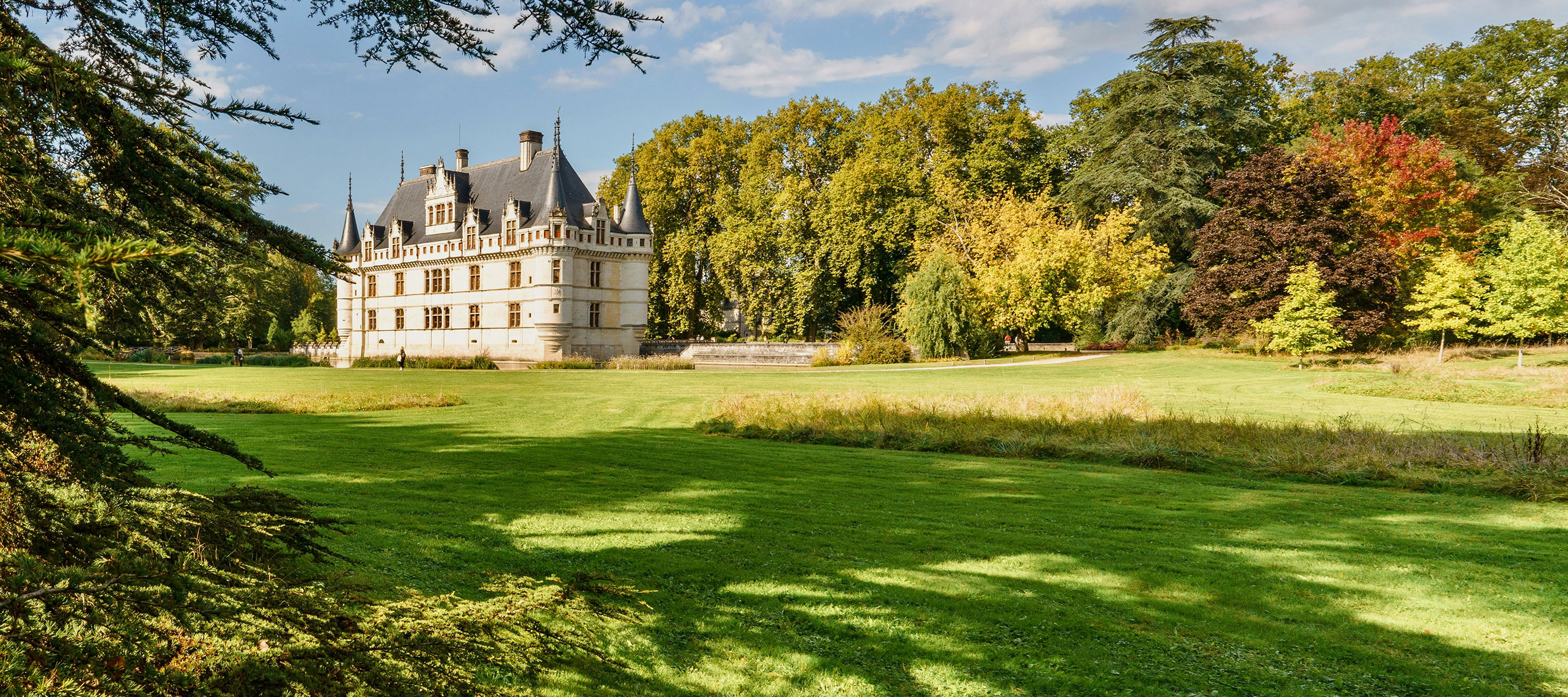


During a military campaign in Italy in 1494-1495, the French king Charles VIII saw a garden that was to have great significance for the future gardens in France. In Naples, he visited the gardens of the Italian king Alfonso II, Poggio Reale, which were idyllically situated with a view of the Bay of Naples and the volcano Vesuvius.
The French king called the place "an earthly paradise". We do not know much about what the gardens looked like, but they undoubtedly bore the mark of the new ideas that were spread with the Italian Renaissance and probably also incorporated elements from the Moorish garden tradition, which had come to Italy from Spain, with shady avenues, fountains and baths.
Charles VIII lost the conquered territories during the military campaign - but he took the memory of Alfonso II's gardens near Naples with him back to France. The king also brought tapestries, paintings and sculptures with him to the court and allied himself with a number of Italian landscape architects, gardeners and craftsmen to help him in his homeland. The new garden style was thus introduced to France, and over the next few years the style was further developed and refined. The introduction of the Italian garden style meant the creation of the classic French garden, le jardin à la francaise or le jardin régulier.
Charles VIII thus changed the way gardens were designed - not only in France, but in most of Europe. And over time, French gardening - in line with French cuisine - came to form a school. In Italy, the Renaissance had meant major changes in art, culture and architecture, and the new garden style emerged at a time when perspective had been invented in painting.
The French kings had come to the Loire Valley after the English had conquered Paris during the Hundred Years' War, and the Loire Valley became the cradle of the French Renaissance. During the 16th century, a number of spectacular gardens were created in the Loire Valley and in the 17th century, the new garden tradition culminated under André le Nôtres, with the creation of gardens such as Vaux-le-Vicomte and Versailles. These gardens were to make kings and nobles all over the world dream of creating gardens à la francaise.
Today, there are more than 1,200 châteaux in the Loire Valley. Among the many castles and gardens, there is great variation, and not all the gardens are classic French gardens. At the bottom of this article you can read about a number of the very best castles and gardens in the Loire Valley. In addition, the article ends with two castles outside the Loire Valley: Château Maintenon and Versailles. If you are visiting the Loire Valley and are coming from Paris, these two castles are excellent as stops on the way.
You can also find gardens in Denmark, inspired by the classic French garden. The garden of Frederiksborg Castle is inspired by the Italian-French garden. The garden was designed by J.C. Krieger in the period 1720-25. The garden was later changed, but in 1993-96 it was restored to its original style according to Krieger's drawings and plans from 1720. North of Madrid, you will find another good example of a garden outside France, inspired by the classic French garden, in the garden of La Granja de San Ildefonso. And that is not surprising, because the castle and garden were built for Louis XIV's grandson.
The classic French garden is an architectural garden. The architecture is at the center of the garden: the castle is located in the middle of the garden, and from the castle's balconies and terraces, you can look out over the gardens. The garden itself is architecturally built up in large fields that are carefully measured and follow the rules of perspective.
The parterres are often separated into garden sections in the garden, in the same way that the walls inside the castle separate the rooms. The classic French garden does not change with the change of seasons. In contrast to the Andalusian/Arabic garden, the classic French garden is built as a supplement to the home, while the garden in the Andalusian design is part of the home. The garden sections are therefore referred to as rooms or theaters in the classic French garden.
The following basic elements are most often included in the classic French garden:
Today, you can experience a number of the gardens that the French kings developed during the Renaissance in the Loire Valley. The main figures in the early development of the French Renaissance garden were four kings in particular: Charles VIII, Louis XII and Francis I and Henry II. These kings built a number of famous castles and gardens, including the Château de Fontainebleau, Château de Blois, Chaumont-sur-Loire, Château Chenonceau and Château Royale d'Amboise. Francis I had a great interest in art and his art collection included works by Michelangelo, Titian and Raphael, among others.
Two women also played a leading role in this period: Catherine de' Medici and Diana de Poitiers. Diana de Poitiers held a prominent position at the court of Francis I and later became the mistress of Henry II, while Catherine de' Medici (her full name in Italian was Caterina Maria Romula di Lorenzo de' Medici) married Henry II when they were both 14 years old.
It was the Hundred Years' War that brought the French kings to the Loire Valley. France was divided in two in a civil war: one side supported the House of Valois and Charles VII, while the other side supported the Burgundians and their allies, the English.
The English conquered parts of France in 1337, and the English king Edward III, with the help of Burgundian forces, gained control of large parts of northern France. The English then gained control of Paris in 1418 and also occupied Reims, where the French kings had been crowned since 1027 in the city's cathedral.
Charles VII sought refuge south of the Loire River in the 1420s and installed his court in the city of Bourges. The king was in need, but his fortunes turned when a young girl named Joan of Arc began to support his cause. Joan of Arc had received a religious vision directly from the Archangel Michael to support Charles VII and reconquer France from the English. Just 9 days after Joan of Arc arrived in Orléans, the city was taken.
Several other cities then fell, and the people of Reims opened the city gates to Charles VII. This allowed Charles to be crowned in Reims Cathedral in 1429. In 1436, the French managed to recapture Paris, and in the 1440s they also conquered Normandy. It was Charles VII's grandson, Charles VIII, who came into contact with the Italian Renaissance during the campaigns of the 1490s.
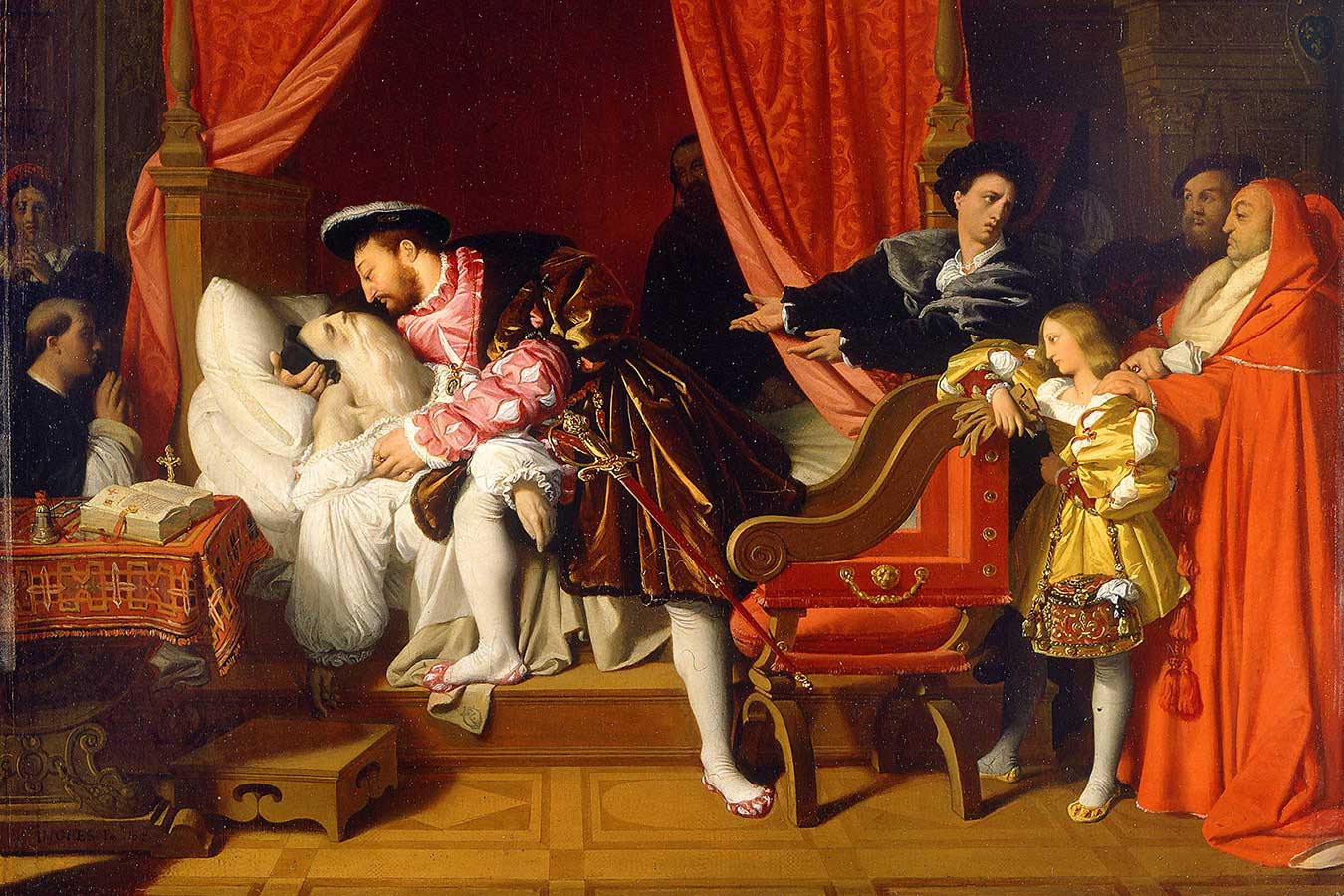
The Italian painter, architect and engineer Leonardo da Vinci was to have a leading role in several of the castles in the Loire Valley when he met the French King Francis I in 1516. The king invited the Italian to the Loire Valley, where he was appointed court painter and architect to the king. Leonardo da Vinci crossed the Alps on the back of a donkey and with him he had several assistants, a servant and three paintings: the Mona Lisa, the Mary and Child Jesus and John the Baptist.
These three paintings are still in France today, namely at the Louvre Museum in Paris. Leonardo da Vinci would spend the last three years of his life in Amboise (1516-1519), where he worked on several works and projects in architecture and art and helped to spread knowledge of art and science.
Via Leonardo da Vinci and other Italian artists, several elements of the Italian Renaissance found their way from Florence to France, and thus the Loire Valley became an important place for the spread of ideas, art and architecture. Leonardo da Vinci had a great influence on a wide range of fields in science and art, and he played a major role in the development of perspective in painting. Another Italian artist, Raphael, learned to use perspective from da Vinci.
Château Villandry is one of the most famous castles and gardens in the Loire Valley and was the last Renaissance castle to be built on the river. The castle was built for the Minister of Finance, Jean le Breton. The Minister had become interested in garden design during his work as ambassador in Rome, and he had visited numerous castles in France - Chambord in particular became an important source of inspiration when he built his castle in 1532.
In the 20th century, the gardens of Villandry were restored by the Spanish physician Joachim Carvallo, and it is these gardens, more than the castle itself, that make the castle interesting. The castle is surrounded by a number of very different gardens, a woodland, a labyrinth and a herb garden.
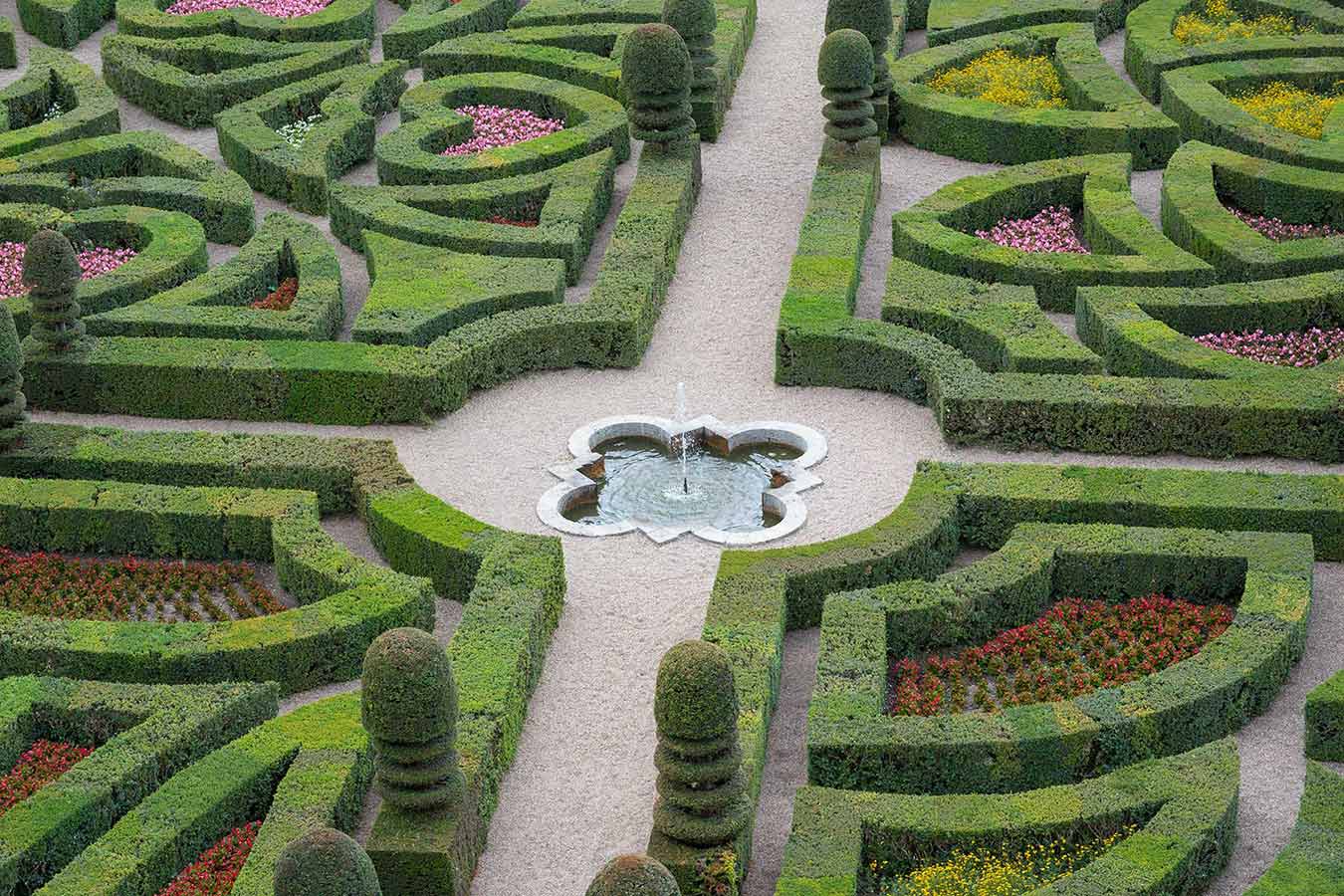
Among the most spectacular garden sections is the Jardin d’ornement: Villandry’s most famous garden and one of the best examples of the classical French garden style that came to the Loire Valley after Charles VIII traveled to Italy in the 1490s. The garden consists of large geometric areas with clipped boxwood and yew, parterres de broderie, which are artfully shaped like hearts, crowns, etc. (see the picture below). Jardin du soleil is inspired by modern English garden art. In this garden, mixed borders are used and in the center of the garden section, there is a fountain, from which 6 paths lead out.
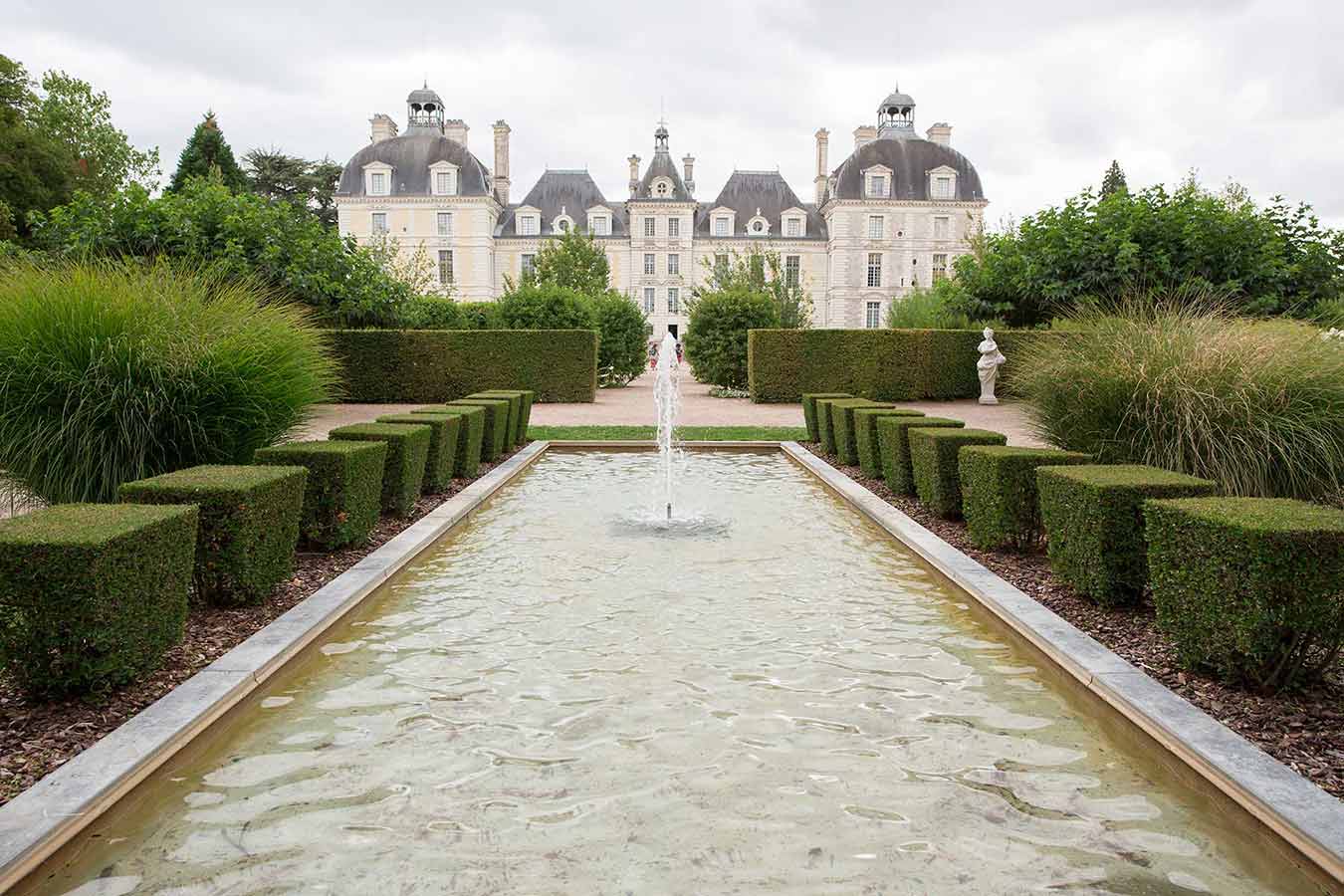
Château de Chéverny is a stunning castle, surrounded by the woodlands of the Sologne Forest and with a total area of approximately 100 hectares. The gardens include a typical French herb/vegetable garden (potager), a tulip garden, Le Jardin des Aprentis with yew prunings, fountains and sculptures as well as an impressive park and a labyrinth. The castle also has an impressive art collection, several woven carpets and many beautiful pieces of furniture.
The history of the castle dates back to the 14th century, but the building you visit today was built in the early 17th century in the Renaissance style by the architect Jacques Bougier. Along with Blois and Chambord, Cheverny is one of the most popular and most visited castles in the Loire Valley.
The castle was originally owned by Duke Phillippe Hurault, who had vineyards and used the castle as a fortress - in some places the fortifications have been preserved today. Diane de Poitiers lived here until she moved to Chenonceau. Today the castle is owned by the Vibraye family (since 1924).
Cheverny is known for having served as an inspiration for Hergé's Tintin comics. In Les Aventures de Tintin, an identical castle is seen, but without the last two wings, which are omitted. In the comic, the castle is called Château de Moulinsart (in Danish Møllenborgslottet), which is the residence of Captain Haddock.
Chaumont-sur-Loire was originally a defensive fortress built around the year 1000 to protect the borders between the counties of Blois and Anjou. In 1465, the castle was burned to the ground by Louis XI, but it was rebuilt a few years later.
The Amboise family owned the castle for a long time, and under Charles II d'Amboise, Renaissance elements were added, which can be seen today. In 1559, the castle was purchased by Catherine de' Medici, who wanted revenge on the king's mistress, Diane de Poitiers, after the king himself had died in 1559. Diane de Poitiers was thus thrown out of the gate of Chenonceau and had to now live in the more humble Château de Chaumont.
The Festival International des Jardins flower festival in Chaumont-sur-Loire has been held since 1992. The Château de Chaumont itself calls the international festival an "experimentarium for modern gardens and landscape design". The festival is very popular and is an exciting mix of art and installations, forest and park, landscape architecture and gardens. Both French and international artists and landscape architects participate in the festival, which lasts from June to the end of September.
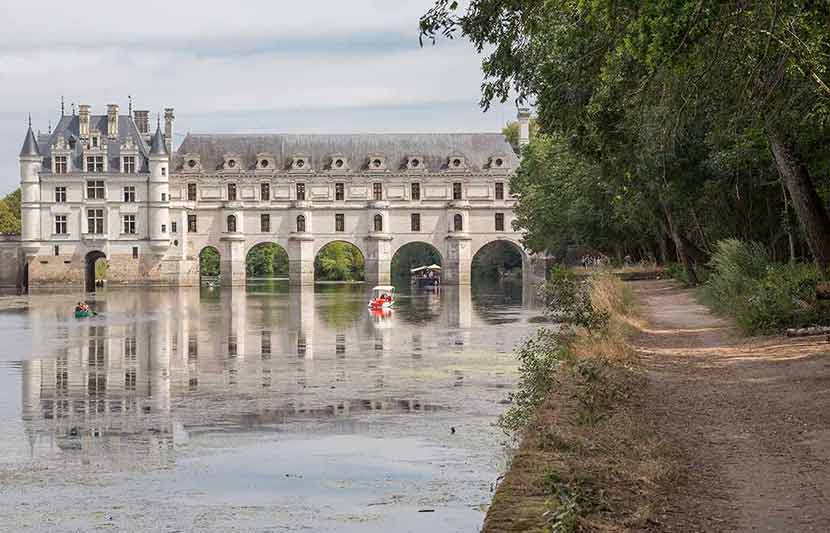
The "Water Castle" Château Chenonceau is a unique castle in the Loire, built over the Cher River (a tributary of the Loire River), so instead of lying alongside the river like the other castles in the area, it runs across the river.
The castle was built in the period 1515 - 1521 by Thomas Bohiers, who was the financial secretary of the French King Francis I and lived here with his wife Katherine Briçonnet. When Thomas Bohiers and Katherine died (in 1524 and 1426 respectively), Francis I received the castle. When his son, Henry II, came to the throne, he gave the castle to Diane de Portiers, and it was she who built the bridge over the river and laid out several of the gardens. Diane's parties at the castle were famous for their fireworks, theater and dances.
Immediately after Henry II died in connection with a knight's tournament in 1559, a power struggle arose between Diane de Portiers and Catherine de' Medici. Catherine de' Medici pulled the long straw and deprived Diane de Portiers of her beloved Chenonceau and exiled her to Chaumont-sur-Loire.
Later, Louise de Lorraine moved into the castle. She became known as the White Widow, as she wore only white mourning clothes after the death of her husband, Henry III. Later, the French philosopher and writer Jean-Jacques Rousseau would also visit the castle and he wrote that he "had become as fat as a monk" after a festive dinner at the castle.
The castle is surrounded by a series of gardens. To the west of the castle is the Jardin de Diane de Poitiers, adorned with hibiscus. Just below the castle is the Catherine de Medici garden with circular fountains, rose bushes and lavender, and further south is the Green Garden with many beautiful trees and a labyrinth garden.
A new garden has recently been opened in memory of (and in honour of) the English garden designer Russel Page, which mixes sculptures and charming beds, and further south is the Potager des Fleurs flower garden.
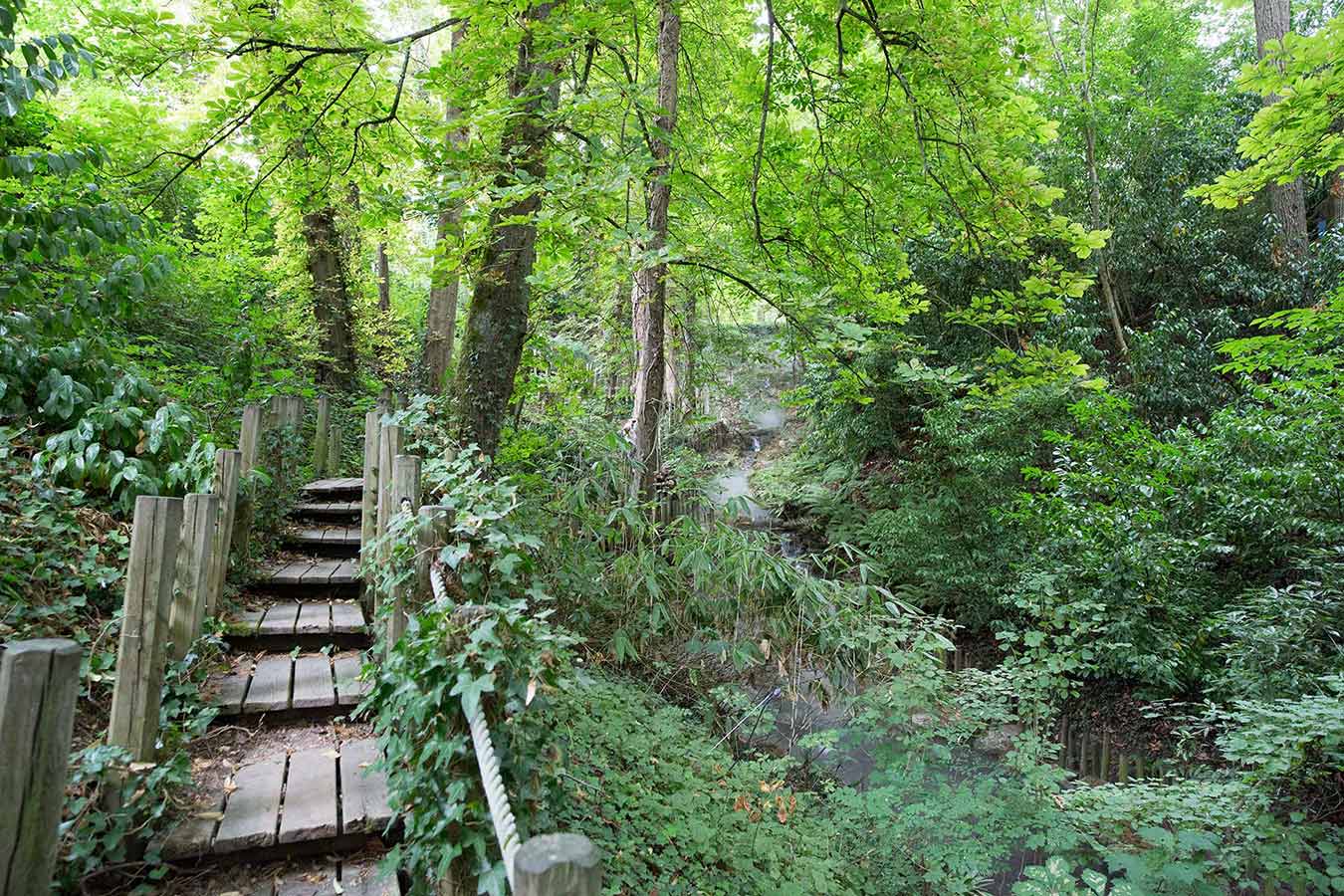
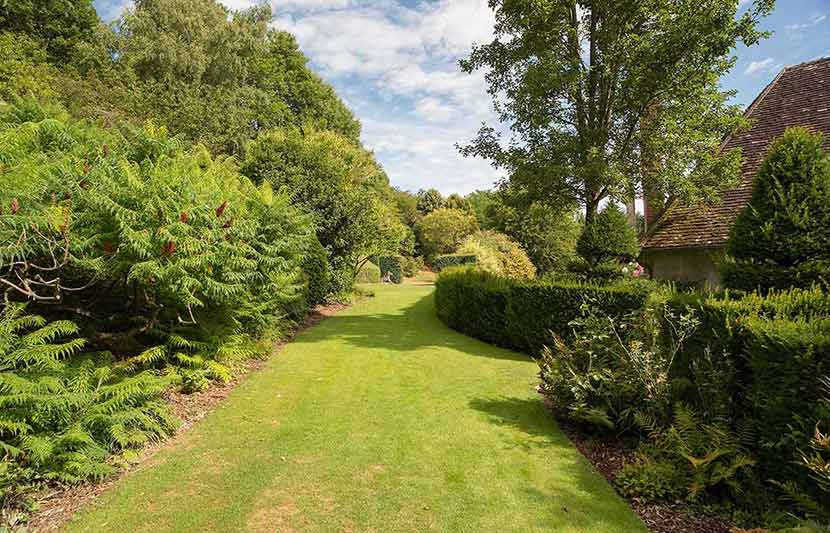
As is the case with Chaumont-sur-Loire, this is a garden that is far from the classic French garden: it is a jardin à la anglaise. It is not surprising that Plessis-Sasnières is close to the classic English garden, because the owner Rosamée Henrion is obsessed with English culture and English design and has visited England numerous times. On her travels, she has drawn inspiration from a wide range of gardens, but especially from Prince Charles’ Highgrove in Gloucestershire.
Plessis-Sasnières is a charming garden of a total of 11 hectares just north of Tours with mixed borders, beautiful perennial beds and a lake with bridges in the center of the garden. Plessis-Sasnières is divided into The garden contains, among other things, magnolias, an impressive Brazilian Mammoth Leaf (gunnera manicata) and many beautiful, tall trees. The garden has been given the designation “remarkable garden” (Jardin Remarquable) by the French Cultural Institute.
Château d'Amboise was built in the 15th century under Charles VIII and Louis XI. The castle is located on a rocky outcrop measuring 40 meters in height, which has been used as a natural fortification since the Stone Age. In the late Middle Ages, a castle was built on the rocks, which was later expanded several times. From 1434, Château d'Amboise served as the residence of the French kings.
As mentioned, it was the experiences in Italy in the mid-1490s that inspired the French king Charles VIII to design a series of gardens based on those he had seen near Naples. Italian architects and designers such as Fra Giocondo and Boccadoro came to work at the château, and on the château terrace the king commissioned the garden designer Pacello da Mercogliano (c. 1455–1534) to design a garden. Charles VIII died at the château in 1498, after hitting his head on the door frame. In the 17th century, châteaux were converted into prisons.
Leonardo da Vinci lived at the château between 1516 and 1519, and his tomb can be seen at the château today. An underground tunnel connects the château to Clos Lucé.
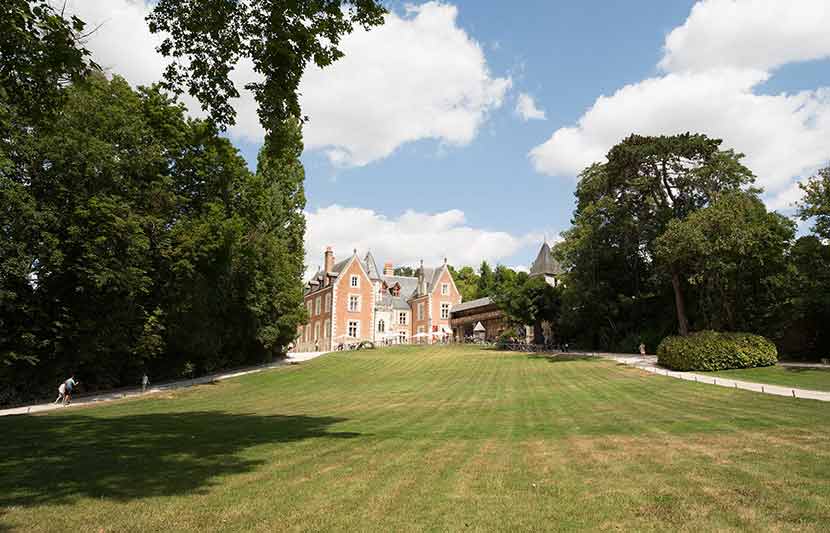
Clos Lucé, formerly known as Manoir du Cloux, is located in the same area as Château d'Amboise in the town of Amboise, and as mentioned, the two castles are connected by an underground passage measuring more than 500 meters. In 1490, the French king, Charles VIII, bought the house, and it thus became the summer residence of the French royal family.
Francis I gave the house to Leonardo da Vinci when he came to the Loire in 1516. During a military campaign, the king had met da Vinci and had persuaded him to come to the court in Amboise, where he would be paid for his work as court painter, architect and inventor and he would be given a house. Leonardo brought three paintings with him and Francis I bought the Mona Lisa, which thus became part of the royal collection and can therefore be seen at the Louvre Museum today.
Today, Clos Lucé is known for its gardens and woodlands, but it is primarily the exhibitions about Leonardo da Vinci that attract visitors. It is possible to visit the house, where you can see da Vinci's bedroom, his study, but also the kitchen and a small chapel that had been built for Charles VIII.
Château Chambord is one of the most visited gardens in France - unfortunately too visited, because even though it is the largest castle in the Loire Valley, the hordes of visitors simply take away part of the enjoyment of the visit. But there is no denying that Chambord is one of the most exciting castles in the Loire Valley. On the other hand, the gardens are not nearly as exciting and they are not maintained to such a high degree.
Chambord was built in the Renaissance style as a hunting lodge for Francis I. There used to be a castle on this site, on the edge of the Bois de Boulogne, but the king was so happy to go hunting in the area that he wanted to expand the castle.
In 1518, a new castle was designed. The main architect was Domenico da Cortona, but it is possible that Leonardo da Vinci also participated in the design - perhaps the famous double staircase was designed by the Italian inventor. In 1537 the castle was completed and in 1539 the king received a visit from the Holy Roman Emperor Charles V. The castle was frequently used by later kings, and the Sun King Louis lived here 9 times.
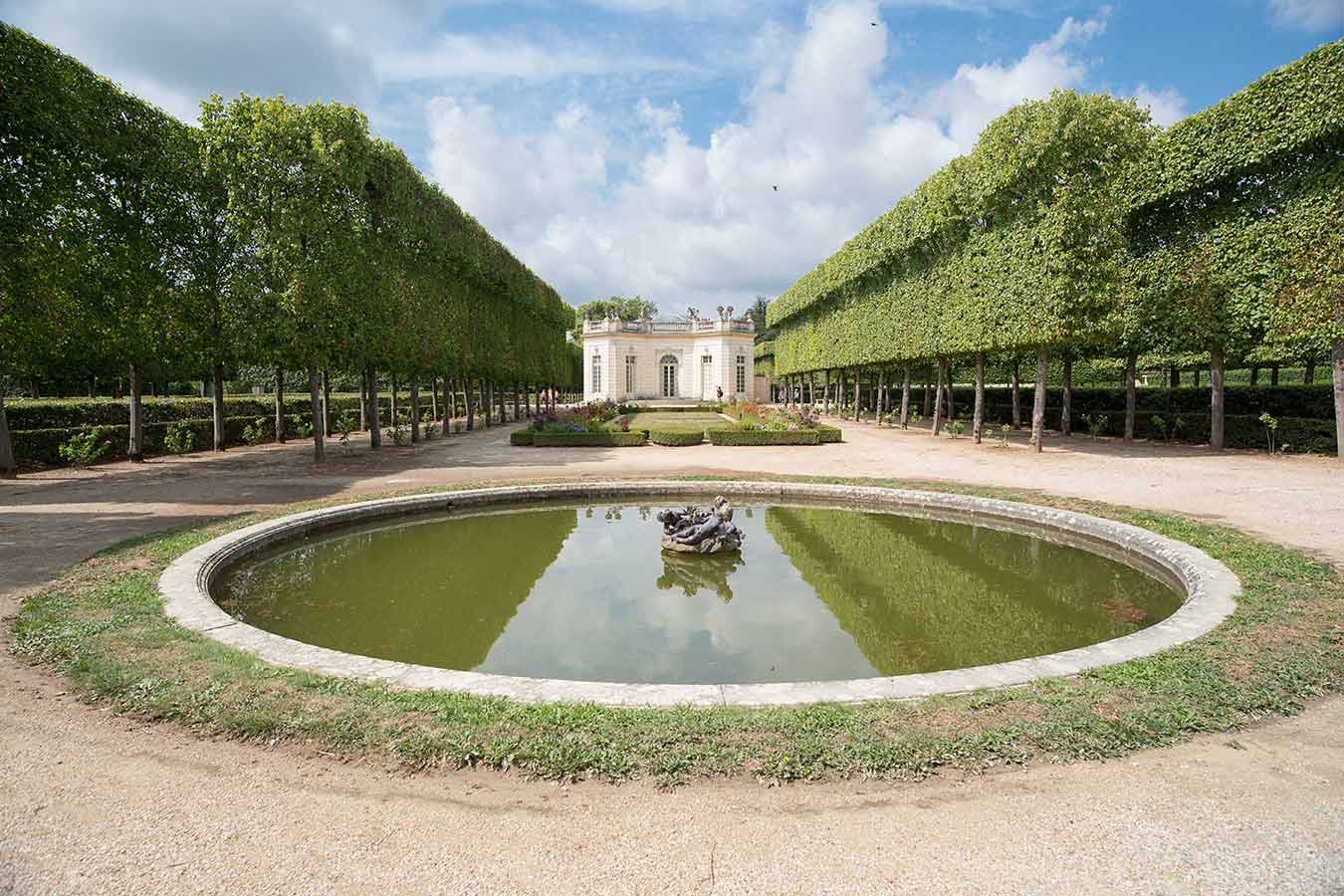
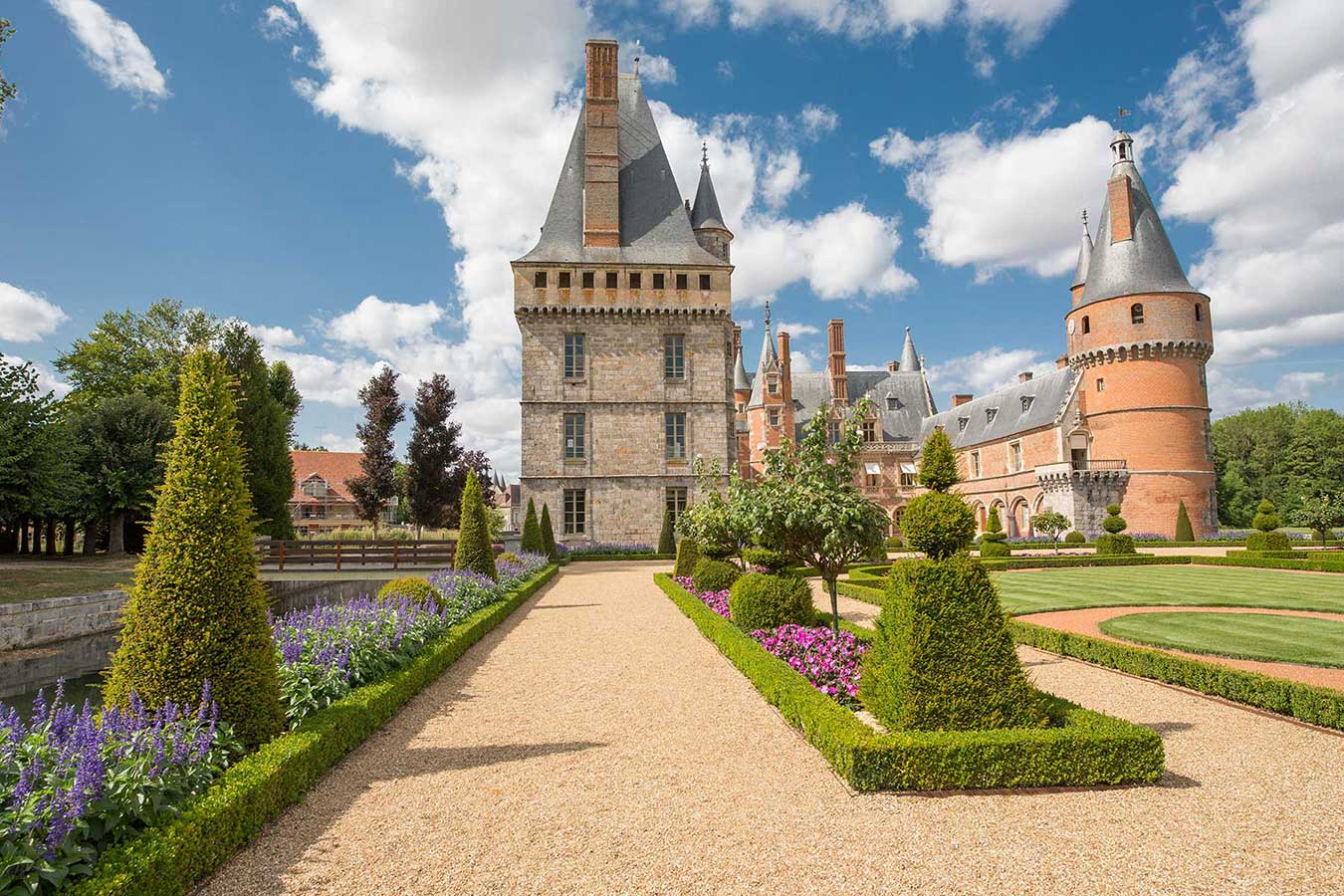
The Château de Maintenon is located between Paris and the Loire Valley and is an obvious stop on the way to the Loire, if you are coming from the airport or the French capital.
Construction of the castle began in the 13th century, but is best known for being used as the residence of Madame de Maintenon, the second wife of the Sun King (Le Roi Soleil) Louis XIV. The Sun King ruled France for more than 72 years - from the age of 4 until his death at the age of 77, most of it from his palace in Versailles.
The garden at Maintenon is a little gem, designed by André le Nôtre. Le Nôtre came to Maintenon in 1676 to design the garden. The building was expanded in several periods over the next centuries, and Madame de Maintenon bought the castle in 1674. The garden has since been modified, but was restored in 2013 based on le Nôtre's original plans and drawings.
Incidentally, it was the Sun King's obsession with fountains in Versailles that led to the construction of the aqueduct, the remains of which can be seen in the back of the gardens at Château Maintenon. More water was needed for Versailles, and a plan was devised to bring water from the Eure River to Versailles via an aqueduct of more than 90 kilometers. Construction of the aqueduct began in 1686, but construction was stopped in 1695 due to lack of funds.